Showing posts with label Numbers. Show all posts

Monday, April 16, 2012

Rational Numbers


The Natural numbers are easy to understand, because they are so, well, natural. We can count with them and use them to order things. We can go a long way with the natural numbers. But sooner or later, we need something more. Perhaps we want to measure a distance, or figure out the circumference of a circle. We need numbers beyond the naturals.

Negative numbers are one means of extending the negative numbers, and they have an obvious interpretation such as debt. As an example, most of us have at one point in our lives have overdrawn our checking account and seen the statement showing a negative balance. Negative numbers are useful for representing debts, temperature, altitude below sea level—anything that can have values below zero. In our modern construction of number systems, negative numbers and zero are the first things we add to the natural numbers, collectively giving us the set of integers, which we usually represent with the symbol Z. The integers seem to be a very natural extension of the naturals, but they were not the first such extension. Negative numbers first appeared in the Chinese text Nine Chapters on the Mathematical Art, which dates from the Han dynasty (202 BC-220 AD) but likely contained older material. Indian mathematicians developed the rules for the use of negatives, which then spread to the Middle East and from there to Europe.

The oldest extension of the natural numbers is most likely the set of rational numbers. Rational numbers are defined as numbers of the form:

They are called rational because they are ratios of integers. The Egyptians were aware of rational numbers, and had a variety of “recipes” for representing rational numbers as the sum of reciprocals of integers. For example:


These expressions are known as Egyptian fractions, and every rational number can be represented in this way. The ancient Greeks not only knew about rational numbers, they studied them in great detail. Rational numbers formed the basis of Greek music theory, and the religious order of the Pythagoreans believed that all phenomenons in the universe could be reduced to whole numbers or their ratios.

Rational numbers are often denoted by Q. The use of the symbol Q comes from the text Algebre by Nicholas Bourbaki, the pseudonym for a group of mostly French 20th century mathematicians that wrote a series of books that unsuccessfully attempted to present an exposition of modern advanced mathematics, attempting to set all of mathematics on modern set theory.

Rational numbers are easy to recognize because their decimal expansion is either a terminating (e.g. ¼=0.25) or repeating (e.g. 1/3 = 0.3333…) decimal. It is also true that any repeating or terminating decimal represents a rational number.

The rational numbers have many interesting properties. One of the most important is that the set of rational numbers is densely ordered. Ordered means that for any to numbers a, b ϵ Q, either a≤b, or b≤a. Dense essentially means that for any two rational numbers a<b, we can find another rational number c such that a<c<b. That means that no matter how close together two rational numbers are, we can always squeeze in another rational number in between them.

With the densely ordered property the set of rational numbers seems to be fairly exhaustive and complete. All of the integers are also rational numbers.  But is every number rational?

The answer is of course “No.”   

Monday, May 16, 2011

The Mystery of Prime Numbers

Prime numbers are one of those things in mathematics that makes you start to think there is a method to the madness of the universe. The fundamental theorem of arithmetic tells us that every natural number can be uniquely factored into a prime numbers. Prime numbers can therefore be viewed as the building blocks of the integers. Yet, while the FTA tells us that every number can in principle be factored into primes, nobody has yet figured out how to factor large numbers rapidly, something that many modern cryptographic protocols—such as the RSA cipher—rely on for their security.


Euclid’s theorem tells us in principle that there are arbitrarily large primes out there, but does not give a recipe to find them.  Indeed, the prime numbers seem to be so “randomly” distributed that it is often difficult to establish what patterns exist within them. The Greeks were certainly aware of the importance of prime numbers, and several key results and conjectures about primes come to us from the ancient Greeks. Much of this is captured in Euclid's Elements.


Very little is known about the Greek mathematician Euclid. The date and place of his birth, and the date and circumstances of his death are unknown; we have only a rough idea based on contemporary references. There were no likenesses or descriptions made of him during his lifetime. The few historical references to Euclid (as opposed to his books) were made centuries after his death. In spite of the scarcity of the historical record, Euclid's Elements are without question the most influential works in mathematics, serving as one of the main texts for the teaching of mathematics from its creation until the early 20th century. Euclid's rigorous approach to mathematical proof remains central to modern mathematics; in many ways Euclid set the standard for a proof. While many, possibly all, of the mathematical results in the Elements originated with other mathematicians, Euclid's impressive accomplishment was to capture the breadth of the mathematics of his day and present it all in a single, logically coherent framework, a feat that was never before accomplished, and never repeated.


After the Greeks, there were relatively few results on prime numbers until the 1600's, when the French monk Marin Mersenne studied primes of the form 2p-1 , with p prime (called Mersenne primes today). Mersenne was a French monk who, in addition to dabbling with prime numbers made great strides in music theory, earning the nickname the “father of acoustics.” In 1640, Pierre de Fermat, perhaps the greatest amateur mathematician of all time, conjectured that ap-a is divisible by p, where a is any integer and p is prime; this is Fermat's Little Theorem, which, like so many of Fermat's theorems, he himself did not prove. Two other luminaries, Leibniz and Euler, tackled this problem much later. Fermat also conjectured that all numbers of the form 22n+1 is prime; he verified this to n=4 , but was proven wrong; the next Fermat number is composite, and no others are known to be prime.


In the 1700's, number theory had fallen out of fashion, prior to tackling Fermat's little theorem and conjecture, Leonard Euler tackled the zeta function, which more than 100 years later was again studied by (and eventually named after) Bernhard Riemann:
Euler's Zeta Function


For s>1, this series is finite. Euler showed that this infinite series has a deep connection to the prime numbers, and the zeta function equals the infinite product:
The Zeta Function and Prime Numbers


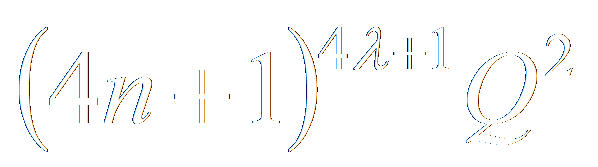
Since Euclid's time, it was known that even perfect numbers, numbers that are the sum of their prime factors, have the form 2p-1(2p-1). In 1747 Euler showed that an odd perfect number would have the form:
Odd Perfect Numbers


While we know what they would have to look like, we don't know if there are any. It is believed no odd perfect numbers exist, but there is no proof. Thus far, it has been shown that no odd perfect numbers exist less than 10300.


The primes behave so randomly that we have no useful exact formula for the nth prime. But we do have an important approximate formula in the Prime number theorem. One of the most important results about prime numbers, it was a long time coming. In the 19th century Legendre and Gauss, conjectured that as x tends to infinity, the number of primes is asymptotic to x/ln(x). In 1859, Riemann described his hypothesis about zeta function, which has become one of the great unsolved problems in mathematics. In his paper, Riemann outlined an approach in this paper that would lead to proof of Legendre and Gauss' conjecture. It was two mathematicians, Jacques Salomon Hadamard and Charles-Jean Étienne Gustave Nicolas de la Vallée Poussin who independently proved Legendre and Gauss' conjecture in 1896.


The prime number theorem shows that the primes have some large-scale structure, even though they can behave quite randomly at smaller scales. The proof of the theorem is a remarkable work of multidisciplinary mathematics, using arithmetic functions (Von Mangoldt function), distribution theory (Mellin transforms), and complex analysis.


Von Mangoldt Function


A prime number’s only divisors are 1 and itself. The fundamental theorem of arithmetic says that every number is either prime or has a unique factorization of prime divisors. This is a powerful result, and it tells us that prime numbers are the building blocks of the integers. However, finding the prime factors of a large integer is hard. Many asymmetric cryptography schemes rely on this difficulty, and make use of it by essentially multiplying extremely large prime numbers together. Knowing only the product and not the primes, factoring is extremely difficult, especially when the numbers are large. With large enough numbers finding the prime factorization is, practically speaking, impossible.


The fundamental nature of prime numbers has been known since the time of the ancient Greeks, but their role in cryptography is relatively recent. What is fascinating is that something decidedly modern such as e-commerce, which requires secure communications for online transactions, makes use of number theoretic results that have been around for more than thousands of years. Despite having studied them since the dawn of mathematics, prime numbers still hold many secrets.

Sunday, May 1, 2011

What Are Numbers?

Numbers are the most natural place to start a survey of mathematics. Each time I've taught the Survey of Mathematics course, we've started with the basic (but not easy) question: “What is a number?” Like many things that we think of as obvious, it is hard to explain. Naming examples of numbers is easy, and it is nearly as easy to list things for which numbers are used—counting, measuring, ordering, and labeling or identifying. We can take these uses of numbers and get a quick definition: a number is a mathematical object used to count or measure (the other uses are related to ordering and uniqueness, two properties most of our number sets will have). This definition is admittedly squishy, but it has one key element that rings true. A number is a mathematical object.

It is easy to confuse the concept of “numbers” with the symbol used to represent them, numerals. To see the differences, consider an example: “5” and “five” are two ways of representing the same abstract mathematical object. “Five” is something beyond the word or symbol we use to describe it. If you look at a stack of five apples and a stack of five books, you can see that while the two stacks may have very little in common, they share the same fundamental quality of “fiveness.” Getting at what “fiveness” or “threeness” actually is takes us down the road to mathematical Platonism, a view of mathematics that has been with us for more than 2000 years.

Plato's philosophy of mathematics grew out of his attempts to understand the relationship between particular things and universal concepts. The world we live in is filled with particular things—this chair, that chair, big chairs, little chairs, and so forth. There is a quality all of the instances of particular chairs share—for lack of a better phrase we'll call it “chairness”—which presents a bit of a problem. It is not itself a chair and unlike all chairs we know it cannot be located in some place or at some time, but that does not mean that “chairness” is a figment of our imagination. Replace “chairness” with “fiveness” or “threeness” and we see how all this applies to numbers. Numbers are not particular things, they are universal concepts.

Initially driven by the need to count things, our understanding of numbers has grown considerably, pushed along by problems we've needed to solve. Counting problems led to the natural numbers, {1,2,3,4,...}, and then to the integers, problems in geometry led to the rational numbers and to the irrational numbers, which collectively give us the real number system. Problems in algebra and physics led to the complex number system. And mathematical explorations have led to more exotic number systems such as quaternions, and generalizations of numbers in abstract algebra like fields. Mathematicians have found these generalizations through their favorite game, making up axioms and seeing where those axioms lead.

To the Platonic way of thinking, these generalizations weren't invented, they were discovered. Numbers, universal concepts that they are, were always there, as were the generalizations like fields, humans just had to figure out how to use and to represent them. Humans didn't invent numbers, we invented numeral systems, but like anything in mathematics, numerals systems rely on notation, and it took a long time to find a notation that worked really well. Exploring how numeral systems evolved, and learning how ancient civilizations did mathematics, is a fascinating journey.